
Drop us a line today for a free Home Valuation

The Repairs That Do Matter
These are the fixes that influence buyer confidence, inspection outcomes, and appraisal value.
1. Safety & Structural Issues
Anything involving the roof, foundation, electrical hazards, plumbing leaks, or mold is non‑negotiable. Buyers see these as red flags, and lenders often won’t approve financing if major defects exist.
Examples:
- Active roof leaks
- Exposed wiring
- Significant water intrusion
- Termite damage
These repairs protect your deal from falling apart later.
2. High-Impact Cosmetic Improvements
Small, inexpensive updates can dramatically improve first impressions.
Examples:
- Fresh paint
- Updated light fixtures
- New cabinet hardware
- Landscaping cleanup
These upgrades make the home feel well‑maintained without draining your wallet.
3. Repairs That Affect Appraisal Value
If your home won’t appraise at the buyer’s contract price, the deal can collapse. Fixes that directly influence value—like functional HVAC, working appliances, or intact flooring—are worth addressing.
How the Age of the Home Changes Everything
Age plays a huge role in what buyers expect—and what repairs matter.
Older Homes (50+ years)
Buyers expect quirks, but they’re wary of major system failures. Repairs that matter most:
- Electrical updates
- Plumbing modernization
- Roof condition
- Structural integrity
Cosmetic updates matter less; character often sells
Mid-Age Homes (20–40 years)
These homes often need system updates. Buyers look closely at:
- HVAC age
- Water heater
- Roof lifespan
- Windows
Cosmetic improvements help, but functional reliability is the priority.
Newer Homes (0–15 years)
Buyers expect move-in ready condition. Repairs that matter most:
- Cosmetic touch-ups
- Minor fixes
- Warranty-related issues
Major repairs are rare, so anything significant becomes a red flag
The Repairs That Don’t Matter
Not every imperfection needs attention. Some repairs simply don’t deliver a return.
1. Upgrades That Don’t Match the Market
Putting $20,000 into a kitchen when the neighborhood caps out at $250,000 doesn’t make financial sense. Buyers in certain price ranges expect “clean and functional,” not “fully renovated.”
2. Minor Wear and Tear
Small scratches, slightly worn carpet, or dated finishes often don’t impact buyer decisions—especially if the home is priced correctly.
3. Personal Preference Projects
Don’t replace countertops, redo bathrooms, or install new flooring just because you think it looks better. Buyers may prefer choosing their own finishes anyway.
How Budget Shapes the Decision
Your budget determines whether you should repair, refresh, or simply reposition the home’s price.
If You Have a Tight Budget
Focus on:
- Cleaning
- Decluttering
- Paint
- Minor repairs
- Curb appeal
These low-cost improvements deliver the highest return.
If You Have a Moderate Budget
Target repairs that improve inspection outcomes and buyer confidence:
- HVAC servicing
- Plumbing fixes
- Electrical updates
- Replacing damaged flooring
If You Have a Larger Budget
You can strategically invest in upgrades that elevate the home’s appeal:
- Kitchen refresh (not full remodel)
- Bathroom updates
- Modern lighting
- Exterior improvements
But even with a big budget, avoid over-improving beyond neighborhood norms.
Buyers expect quirks, but they’re wary of major system failures. Repairs that matter most:
- Electrical updates
- Plumbing modernization
- Roof condition
- Structural integrity
Cosmetic updates matter less; character often sells
The Bottom Line
Repairs matter when they:
- Affect safety
- Impact inspections
- Influence appraisal
- Improve first impressions
- Align with buyer expectations for the home’s age and price range
Repairs don’t matter when they:
- Don’t increase value
- Don’t match the neighborhood
- Are purely cosmetic or preference-based
- Exceed your budget without delivering a return
Selling a home is ultimately about strategy, not perfection. The smartest sellers invest where it counts, skip what doesn’t, and price the home accordingly.
Thinking about selling your home in South Jersey? Contact Jacob Ely Real Estate for a personalized market analysis
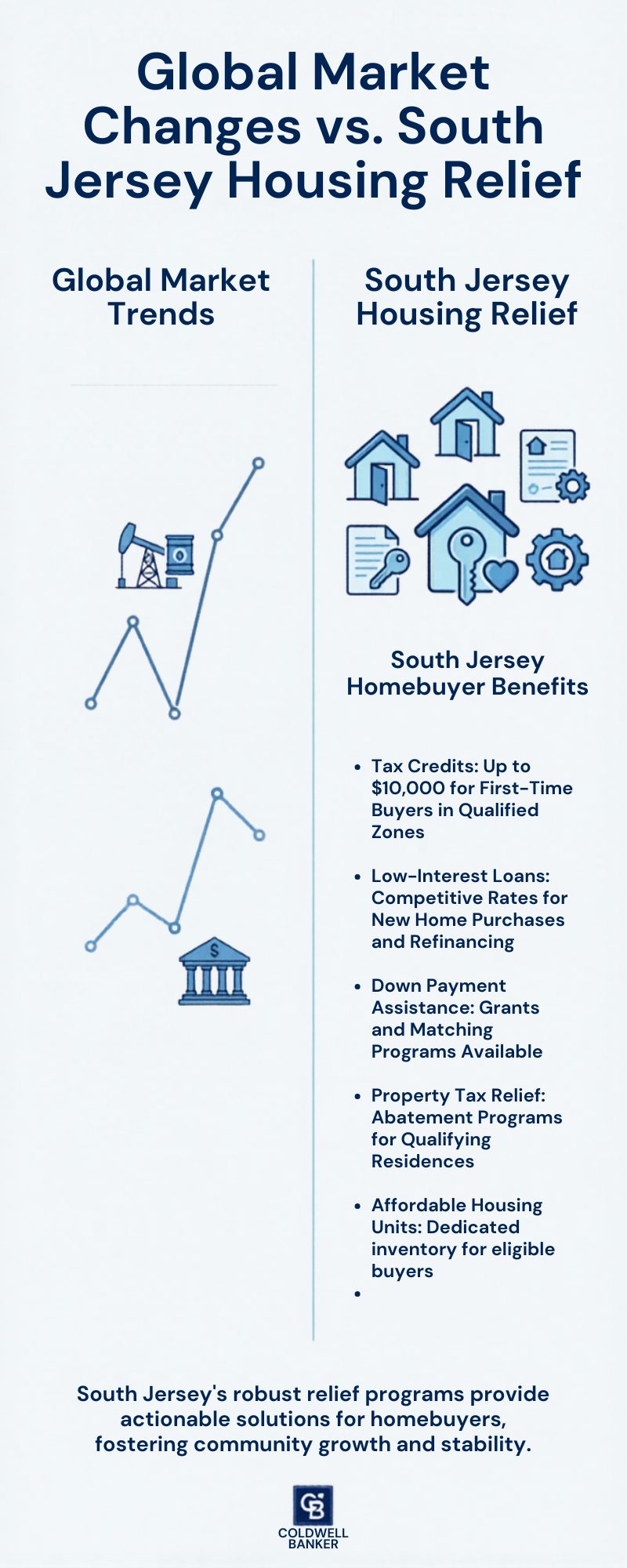
A two-week ceasefire was recently announced, and while it might seem worlds away from the Jersey Shore, the ripple effects are hitting the South Jersey housing market immediately.
The Highlights:
-
Oil Prices: Dropped over 16% instantly.
-
10-Year Treasury Yield: Fell to 4.30%, which is the primary anchor for mortgage rates.
-
Buying Power: This cooling of inflation creates a "green shoot" for lower mortgage rates in Atlantic and Cape May Counties.
1. For the Buyers: The "Inventory Window"
"While lower rates are great news, remember that as rates dip, competition typically heats up. In areas like Ventnor, Margate, and Ocean City, a slight drop in rates can bring sidelined buyers back into the market overnight. If you find a home that fits your needs now, it may be better to secure it before the 'Second Summer' rush begins."
2. For the Sellers: The "Buyer Pool" expansion
"For homeowners thinking of listing, this shift is your green light. Lower mortgage rates increase the pool of qualified buyers who can afford your asking price. We are moving from a 'wait-and-see' market back into an 'active' market—positioning your home now allows you to capture this new wave of motivated buyers."
. Local Support & Stability
Beyond the global economic shifts, South Jersey continues to offer specific local advantages that provide growth and stability for residents:
-
Property Tax Relief: Abatement programs are available for qualifying residences to help lower the cost of ownership.
-
Affordable Housing Units: Dedicated inventory remains available for eligible buyers to ensure community accessibility.
-
A Perspective from 15+ Years in the Trenches
"I earned my real estate license in 2008, right as the 'Great Recession' was hitting its peak. I’ve seen the market die, I’ve seen it rise, and I’ve seen everything in between. If there is one thing I’ve learned in nearly two decades serving the South Jersey shore, it’s that this too shall pass. The real estate market traditionally moves in 10-year patterns. While global news or sudden rate shifts can feel like a roller coaster, the market always finds its level and adjusts itself. Whether we are in a peak or a valley, the goal remains the same: making smart, long-term decisions for your family and your portfolio."
Don't miss the "Inventory Window.
Rates are shifting and the market is moving fast. Let’s look at how your specific buying power has changed this week.
Global Uncertainty, Local Opportunity: Understanding Interest Rates in South Jersey’s Market

🌍 How Global Events Can Influence Interest Rates – What South Jersey Homebuyers Should Know
When big world events make headlines, many homebuyers start wondering how these changes might affect mortgage rates and the real estate market. It’s a fair question – and understanding the basics can help you make confident decisions, even when the news feels uncertain.
In this guide, we’ll break down how global events can influence interest rates, what that means for the housing market, and why South Jersey buyers can still move forward with clarity.
💡 Do Global Events Affect Mortgage Rates?
Yes – but not always in the way people expect.
Interest rates are influenced by several factors, including:
- Inflation
- Federal Reserve policy
- Investor behavior
- Economic growth
- Energy prices
When something major happens overseas, especially in regions tied to oil production, financial markets may react. But these reactions are often temporary, and long-term mortgage trends depend on broader economic conditions.

⛽ How Energy Prices Play a Role
If global tensions push oil prices higher, it can lead to:
- Increased transportation and production costs
- Short-term inflation pressure
- A more cautious approach from central banks
But here’s the part most buyers don’t realize:
During times of uncertainty, investors often move money into safer assets like U.S. bonds – which can actually push mortgage rates down temporarily.
So while global events can influence rates, the direction isn’t always predictable.

🤝 How I Help You Navigate the Market
My role is to help you understand what’s happening, filter out the noise, and make confident decisions based on your goals – not the headlines.
Whether rates dip, rise, or stay steady, there are always opportunities in the South Jersey market. And with the right guidance, you can move forward with clarity.
If you’re thinking about buying or selling this spring, I’m here to help you make sense of the market and choose the best path forward.
📉 What This Means for Mortgage Rates in the U.S.
Mortgage rates respond to market expectations, not headlines alone. That means:
- Rates may move up or down more quickly
- Short-term volatility is normal
- Long-term trends depend on inflation and Federal Reserve decisions
For homebuyers, the key takeaway is simple:
You don’t need to predict the world – you just need a smart strategy.
🏡 Why South Jersey Buyers Can Still Feel Confident
Even when global news feels uncertain, the South Jersey real estate market remains steady and desirable. Local factors matter far more than international headlines.
Here’s why:
- Coastal and suburban living continues to attract buyers
- Inventory levels shape pricing more than global events
- South Jersey remains a stable long-term investment
Plus, buyers have tools to protect themselves:
- Rate locks
- Buy-down options
- Flexible loan programs
- Local market guidance

Ready to find out more?
Contact me today for the latest updates
Click Here7 Inexpensive Ways to Get Your Home "Market-Ready" in 2026
Preparing your home for sale doesn’t have to mean a $50,000 kitchen remodel. In fact, in today’s market, many buyers are looking for a "clean canvas" rather than someone else’s expensive custom choices. If you want to maximize your return on investment (ROI) without breaking the bank, focus on these high-impact, low-cost updates.
1. The Power of "Aggressive" Decluttering
The cheapest way to make your home look bigger is to remove what’s in it. In 2026, the "minimalist luxury" aesthetic is a major draw.
-
The Rule of Thirds: Aim to remove one-third of your belongings. Clear off kitchen counters, thin out bookshelves, and empty closets until they are only 50-60% full.
-
Storage Matters: Buyers will open your closets. If they see a packed, disorganized space, they assume the house lacks storage. Neatly organized bins can make a small closet look like a selling point.
2. Deep Clean Like a Professional
A "sparkling clean" home signals to buyers that the property has been well-maintained. If you don't want to hire a pro, focus on the details that often get missed:
-
Baseboards and Vents: Dust and grime here are immediate red flags.
-
Windows: Wash them inside and out. It increases natural light, making rooms feel larger and more cheerful.
-
Neutralize Smells: Avoid heavy candles which can look like you’re hiding something. Instead, use a deep-cleaning carpet steamer to remove odors at the source.
3. Paint: The Ultimate ROI
A fresh coat of paint is widely considered the best ROI home improvement.
-
Stay Neutral: Use warm whites, creams, or light "greige." These colors make spaces feel open and allow buyers to envision their own furniture.
-
The Front Door: A freshly painted front door (think classic black or a sophisticated deep blue) can boost curb appeal instantly for the price of a single gallon of paint.
4. Swap the "Jewelry" (Hardware & Fixtures)
Old, tarnished brass handles or dated 90s light fixtures can make a whole room feel ancient.
-
Kitchen & Bath: Replacing cabinet pulls and faucets with modern matte black or brushed nickel finishes is a DIY task that costs under $200 but makes the space look "renovated."
-
Switch Plates: Replace yellowed or mismatched outlet covers with crisp white, modern plates. It’s a tiny detail that creates a sense of "newness
5. Boost Curb Appeal for Under $100
First impressions happen at the curb. You don't need a professional landscaper to win over a buyer.
-
Fresh Mulch: A few bags of dark mulch in your flower beds provide an instant "pop."
-
Edge the Lawn: A clean, sharp line between your grass and the sidewalk makes the yard look professionally cared for.
-
New House Numbers: Modern, easy-to-read numbers add a touch of contemporary style for about $20.
6. Light it Up
Dark corners make a house feel small and depressing.
-
Match Your Bulbs: Ensure every light in the house has the same "color temperature" (Soft White or Daylight).
-
Increase Wattage: Switch to higher-wattage LED bulbs (within your fixture's safety limits) to brighten up dim hallways or basements.
7. Minor Repairs, Major Confidence
Buyers are often looking for reasons to "nickel and dime" an offer. Don't give them an excuse.
-
The "Handyman Day": Spend one Saturday fixing the leaky faucet, the squeaky door, and the loose floorboard. These small fixes prevent a buyer from wondering, "If they didn't fix the faucet, what else is broken?"
The Bottom Line: You don't need a massive budget to stand out in the NJ real estate market. By focusing on cleanliness, light, and neutral aesthetics, you can make your home irresistible to the widest pool of buyers.
Ready to see how your home stacks up? I can provide a complimentary "Room-by-Room" review to tell you exactly which small fixes will net you the highest price in today's market.
-
-
-
-


Want a Professional Second Opinion?
Get My Free Room-by-Room Review
 What’s Driving the Move Toward a Buyer’s Market?
Realtor.com’s latest analysis of the 50 largest U.S. metros shows that 18 markets now have more than six months of housing supply, the threshold that signals a buyer’s market. Months of supply measures how long it would take for all current listings to sell at the current pace – and the higher the number, the more negotiating power buyers gain.
A few standout metros include:
- Miami, FL – 11.5 months of supply
- Austin, TX – 10.5 months
- Orlando, FL – 8.2 months
- Tampa, FL – 7.9 months
- New York City – 7.7 months
These markets are seeing homes sit longer, more price reductions, and sellers who are increasingly open to concessions.
Why This Matters for South Jersey Buyers
Even though South Jersey isn’t on the list of metros with extreme inventory surges, national trends often trickle into our region with a slight delay. Here’s what local buyers should take away:
1. More Leverage Is Coming
As more markets soften, sellers nationwide are adjusting expectations. That mindset shift often spreads – meaning South Jersey buyers may soon see:
- More price flexibility
- More seller concessions
- More room to negotiate repairs or closing costs
2. Rising Inventory Elsewhere Can Ease Competition Here
When buyers have more options in major metros, it reduces pressure on secondary markets. That can help stabilize prices and reduce bidding‑war intensity.
3. Interest Rate Buydowns Are Back on the Table
Agents in buyer‑heavy markets report sellers offering concessions like:
- Temporary or permanent rate buydowns
- Closing cost credits
- HOA fee contributions These strategies can dramatically improve affordability – and they’re becoming more common everywhere.
-
What Sellers in South Jersey Should Know
A shifting national landscape doesn’t mean doom for sellers – but it does mean strategy matters more than ever.
1. Pricing Must Be Realistic
In markets like Miami and Austin, overpriced homes are sitting while well‑priced, move‑in‑ready homes still move quickly. The same pattern applies here: buyers are willing to pay for value, but they’re no longer rushing into inflated prices.
2. Presentation Is Everything
Turnkey homes continue to command top dollar. If you’re selling in 2026, small improvements – paint, lighting, landscaping – can make a measurable difference.
3. Expect More Negotiation
Buyers are becoming more assertive, and sellers who stay flexible will win. That may include:
- Covering part of the buyer’s closing costs
- Offering a home warranty
- Making repairs upfront
Is South Jersey Becoming a Buyer’s Market?
Not yet – but the indicators are shifting.
South Jersey tends to follow national trends with a lag, and as more metros transition into buyer‑friendly territory, our region is likely to see:
- Slightly longer days on market
- More inventory entering the spring and summer seasons
- A more balanced negotiation environment
For buyers who felt squeezed over the past few years, 2026 may finally bring breathing room.
What This Means for You
Whether you’re buying or selling, the key is timing and strategy.
If you’re a buyer:
- Get pre‑approved early
- Watch for price reductions
- Don’t be afraid to negotiate – concessions are back
- Be ready to move when the right home appears
If you’re a seller:
- Price strategically from day one
- Make your home stand out with strong presentation
- Be open to reasonable concessions
- Work with an agent who understands shifting market dynamics
Thinking About Making a Move in 2026?
The market is changing – and having the right guidance matters more than ever. If you want a personalized breakdown of what these national trends mean for your neighborhood, I’m here to help.
You can explore listings, market data, and buyer resources anytime at jakerealestateacnj.com.

Home Ownership & Dogs: Why They Are the Perfect Pair
🐾 The Freedom to Fetch
One of the biggest hurdles for dog owners in the rental market is the "pet policy." When you own your home, you make the rules. * No more worrying about breed restrictions or weight limits.
-
Say goodbye to monthly "pet rent" fees.
-
Choose a home with the perfect backyard for a game of fetch.
🏠 Building a Forever Den
Dogs thrive on stability. Moving from apartment to apartment can be stressful for a pup. Homeownership provides a "forever home" for your best friend, allowing them to:
-
Get comfortable in a consistent environment.
-
Bond with the "regulars" at the local park.
-
Settle into a lifelong neighborhood routine.
🛁 Customizing for Comfort
As a homeowner, you have the creative freedom to renovate with your dog in mind:
-
Mudroom Wash Stations: Perfect for those rainy Atlantic City days.
-
Pet-Friendly Flooring: Choose durable surfaces that stand up to paws and claws.
-
Built-in Features: Install custom doggy doors or dedicated feeding stations.
.
The Explosion of the "Pet Economy"
It’s no longer just about the local dog park. We are seeing a massive surge in businesses and services that treat pets as true family members rather than just animals.
-
Pet-Centric Retail & Dining: From "yappy hours" at local breweries to high-end boutiques offering organic treats and designer collars, businesses are realizing that welcoming dogs is a major competitive advantage.
-
Specialized Real Estate Services: More Realtors are now highlighting "pet-friendliness" as a core selling point, focusing on proximity to 24-hour emergency vets, groomers, and dog-friendly beaches in areas like Atlantic City and Ventnor.
-
Mobile Pet Care: The convenience of mobile grooming and at-home veterinary visits has skyrocketed, catering to busy homeowners who want premium care without the stress of a car ride for their pets.
-
Luxury Boarding & Daycare: Traditional kennels are being replaced by "pet hotels" featuring webcams, private suites, and structured playgroups, ensuring your dog has a vacation of their own while you’re away.
Why This Matters for Homeowners
This shift creates a "cycle of community." When you buy a home in a pet-friendly neighborhood, you aren't just buying a house; you’re gaining access to a network of local businesses that understand your needs. This enhances your property value and makes your daily life significantly easier.
Local Dog Parks
-
Egg Harbor Township Dog Park (Members Only): A secure, key-fob access park at 2 Swift Drive.
-
Margate City Dog Park: A community favorite at 405 N Brunswick Drive for residents of Margate, Ventnor, and Longport.
-
Altman Park (Atlantic City): An off-leash park located near the Absecon Lighthouse.
-
Longport Dog Beach: The go-to spot for off-leash fun at the foot of the Ocean Drive Bridge.






Find Homes near Dog Parks
Get a list of homes close to dog parks and services

🏡 Resale vs. New Construction: What South Jersey Buyers Should Know
In today’s South Jersey real estate market, buyers are weighing two major options: purchasing a resale home or investing in new construction. Each path offers distinct advantages—and trade-offs—that can impact your budget, timeline, and long-term satisfaction. Let’s break down the pros and cons of both, with a local lens on what’s happening across Camden, Gloucester, Atlantic, and Cape May counties.
🔨 New Construction: Fresh, Incentivized, but Slower
Pros:
- Developer Incentives: Many builders in South Jersey are offering special interest rate buydowns, closing cost assistance, and appliance packages to attract buyers. These perks can significantly reduce upfront costs.
- Customization: Buyers often get to choose finishes, layouts, and upgrades to suit their taste.
- Energy Efficiency: New homes typically feature better insulation, smart systems, and modern HVAC setups, which can lower utility bills.
- Warranty Coverage: Most new builds come with structural and systems warranties, offering peace of mind.
Cons:
- Longer Wait Times: Build timelines can stretch from 6–12 months, especially in high-demand areas like Woolwich, Sicklerville, and Egg Harbor Township.
- Higher Property Taxes: New construction is assessed at full market value, often resulting in higher annual tax bills compared to resale homes.
- Limited Inventory: Some developments have waitlists or limited lot availability, making it harder to secure a unit quickly.
-
🏠 Resale Homes: Faster, Potentially Cheaper, but Competitive
Pros:
- Immediate Move-In: Resale homes are ready now—ideal for buyers who need to relocate quickly or want to lock in a rate before market changes.
- Lower Taxes: Older homes often have lower assessed values, which can mean thousands in annual savings.
- Established Neighborhoods: Mature landscaping, settled communities, and known school zones can be a big draw.
Cons:
- Bidding Wars: Inventory remains tight in South Jersey, especially under $350K. Resale homes often attract multiple offers, driving prices above asking.
- Maintenance Costs: Older systems and finishes may require updates or repairs sooner than a new build.
- Less Customization: What you see is what you get—unless you’re ready to renovate.
-
💡 Final Thoughts
If you’re looking for a turnkey home with predictable taxes and a fast move-in, resale might be your best bet. But if you’re drawn to modern features and builder incentives—and can wait for the right lot—new construction offers long-term value.
In South Jersey’s dynamic market, the right choice depends on your timeline, budget, and lifestyle goals. Whether you’re eyeing a townhome in Ventnor or a single-family build in Egg Harbor Township, understanding these trade-offs will help you make a confident decision.
Ready to find out more?
Drop us a line today for a free quote!
Is Buying a Home Better Than Renting?
The average cost to rent a 3 bedroom Home in New Jersey is $3,000
If you are currently paying $3,000 per month in rent, you are already proving you can handle a significant monthly housing cost. In today's market (as of early 2026), that same $3,000 monthly budget could potentially afford you a home priced at approximately $480,000.
How the Numbers Break Down
When you transition from renting to buying, your $3,000 "all-in" payment is typically split into four categories:
-
Principal & Interest: The core of your mortgage payment.
-
Property Taxes: Essential for local services (estimated for NJ).
-
Homeowners Insurance: Protecting your investment.
-
PMI (Private Mortgage Insurance): Usually required if your down payment is less than 20%.
The Hidden Financial Benefit
While rent is a 100% expense that goes to your landlord, a mortgage payment acts as a forced savings plan.
-
Equity Building: A portion of every $3,000 payment goes toward your principal balance, building your net worth.
-
Tax Advantages: You may be eligible for tax benefits that renters don't receive.
-
Fixed Costs: While rents tend to increase by 2–4% annually, a fixed-rate mortgage keeps your principal and interest the same for 30 years.

Buy for 3,000/mo.
$ 3,000 Per Month
- Own a home worth approximately 480,000
- Build equity every single month
- Lock in your housing cost for 30 years
- Potential tax interest deductions
Find Out Exactly What You Can Afford
Get a personalized mortgage breakdown and see what kinds of programs that can help 1st time buyers.

Couple preparing to buy a property.
Navigating Today’s Real Estate Market: Your Guide to Buying a Home.
The journey to homeownership is exciting, but it can also feel overwhelming, especially with headlines constantly shifting. If you’re considering buying a home, you’re likely wondering: Is now a good time? Can I afford it? Where do I even begin?
Don’t let uncertainty delay your dreams. With the right strategy and a trusted local expert by your side, securing your ideal home is absolutely within reach. This guide will cut through the noise and equip you with the knowledge to buy your next home confidently.
Understanding the Current Market: What Buyers Need to Know
Today’s real estate market often feels complex. We’re seeing fluctuating interest rates, evolving inventory, and varying price trends depending on your specific location. While some markets are still competitive, others are offering more opportunities for buyers.
Key things to consider:
-
Interest Rates: Stay informed, but don’t obsess. Even small rate changes can impact affordability, so understanding your budget with different scenarios is crucial. Remember, a good home at a slightly higher rate can still be a better long-term investment than waiting indefinitely.
-
Inventory: Some areas are seeing increased inventory, giving buyers more choices and potentially reducing bidding wars. Other desirable neighborhoods may still have limited options, requiring quicker decisions.
-
Home Prices: While a general trend might be reported, real estate is hyper-local. What’s happening in one town can be very different from the next.
The most important takeaway? Local market knowledge is your most powerful tool.
Your Pre-Purchase Checklist: Getting Ready to Buy
Preparation is key to a smooth and successful home-buying experience. Here’s a checklist to get you started:
-
Assess Your Finances:
-
Budgeting: Clearly define what you can realistically afford for a monthly mortgage payment, including property taxes, insurance, and potential HOA fees.
-
Savings: Ensure you have enough saved for your down payment and closing costs.
-
Credit Score: Check and improve your credit score if needed, as this significantly impacts your interest rate.
-
-
Get Pre-Approved, Not Just Pre-Qualified: A pre-approval from a lender demonstrates your serious buying intent and tells sellers you’re a qualified buyer. This is a critical step before you even start looking.
-
Define Your Must-Haves & Nice-to-Haves: Create a clear list of what you absolutely need in a home (e.g., number of bedrooms, specific school district) versus what you’d love to have (e.g., updated kitchen, large yard). This helps narrow your search.
-
Research Neighborhoods: Look beyond the house itself. Consider commute times, local amenities, school ratings, and future development plans in neighborhoods you’re interested in.
Why Partnering with a Local Real Estate Expert is Non-Negotiable
Navigating the nuances of local real estate trends, negotiating offers, and understanding complex contracts can be daunting. This is where a seasoned real estate agent, especially one deeply familiar with your target area, becomes invaluable.
A local expert can:
-
Provide Hyper-Local Market Insights: They know the micro-trends that national reports miss – which streets are hot, upcoming developments, and true neighborhood values.
-
Identify Off-Market Opportunities: Sometimes, the best homes aren’t publicly listed yet. A well-connected agent can give you an edge.
-
Negotiate Effectively: From crafting competitive offers to handling counter-offers and inspection requests, their negotiation skills can save you time and money.
-
Streamline the Process: They connect you with trusted lenders, inspectors, and other professionals, making your journey seamless.
Don’t leave your biggest investment to chance.
Ready to Find Your Dream Home?
Whether you’re a first-time homebuyer feeling overwhelmed or an experienced homeowner looking to relocate to a new neighborhood, now is the time to turn your aspirations into reality.
I’m Jacob Ely, your dedicated local real estate expert, and I’m here to guide you through every step of the process. From understanding current mortgage rates to discovering hidden gems in Ventnor City, NJ, or the surrounding South Jersey real estate market, my goal is to make your home buying experience successful and stress-free.
Let’s connect and discuss your home-buying goals today!

Young couple
Buying a home in today’s economy is challenging—but not impossible. With smart planning, disciplined saving, and strategic timing, you can position yourself to purchase confidently and sustainably.
🏡 How to Save and Prepare to Buy a Home in This Economy
The housing market is still competitive, interest rates remain elevated, and inflation continues to impact everyday expenses. But if homeownership is your goal, here’s how to make it happen—even in 2025.
💰 1. Know Your Numbers First
Before you start saving, understand what you’re aiming for:
- Down payment: Typically 3%–20% of the home price. A $300,000 home might require $9,000–$60,000.
- Closing costs: Usually 2%–5% of the purchase price.
- Monthly affordability: Use mortgage calculators to estimate payments based on current rates (around 6.8% for a 30-year fixed).
📊 2. Build a Budget That Works
- Track your spending: Use apps or spreadsheets to monitor income and expenses.
- Cut non-essentials: Pause subscriptions, reduce dining out, and renegotiate bills.
- Automate savings: Set up recurring transfers to a high-yield savings account dedicated to your home fund.
🏦 3. Choose the Right Savings Vehicle
- High-yield savings accounts: Safe and accessible, ideal for short-term goals.
- Certificates of deposit (CDs): Lock in higher interest rates for fixed periods.
- Money market accounts: Offer better returns with check-writing flexibility.
🧠 4. Improve Your Credit Score
A better credit score means better mortgage rates:
- Pay bills on time
- Keep credit utilization below 30%
- Avoid opening new credit lines before applying for a mortgage
🏘️ 5. Explore Loan Options
- FHA loans: Require lower down payments (as low as 3.5%) and are great for first-time buyers.
- VA loans: No down payment for eligible veterans.
- Conventional loans: Offer flexibility but require stronger credit and higher down payments.
📉 6. Time Your Market Entry
- Watch interest rate trends: Even a 0.5% drop can save thousands over the life of a loan.
- Monitor local inventory: More listings can mean better deals.
- Consider seasonal timing: Winter months often bring less competition and motivated sellers.
🧭 7. Get Pre-Approved Early
A mortgage pre-approval:
- Shows sellers you’re serious
- Helps you understand your budget
- Locks in a rate for up to 90 days
🛠️ 8. Prepare for Hidden Costs
- Home inspection fees
- Appraisal fees
- Moving expenses
- Initial repairs and furnishings
🧩 Final Thought
In this economy, buying a home requires more than just saving—it demands strategy. Whether you’re a first-time buyer or an investor looking to expand, the key is preparation. If you’re ready to explore properties in Atlantic City or South Jersey, I can help you find homes that match your budget and long-term goals.
Let’s turn your savings into a smart investment. Reach out today to start your homeownership journey
🏡 Ready to Start Your Homeownership Journey?
In this economy, buying a home requires more than just saving—it demands strategy. Don’t go it alone! Reach out today to schedule a free, no-obligation consultation. As a South Jersey expert, I can help you find a home that matches your budget and long-term goals.
Click here to contact Jacob Ely and start your Search today!
